
How to Teach Beginners to Play Pickleball in 75 Minutes
A practical, court-tested lesson structure designed to give complete beginners enough knowledge and confidence to start playing safely without overwhelming them with too much information.
The aim of the first lesson
Beginners do not need to master every pickleball stroke. They need enough understanding to participate in a game, stay safe and enjoy themselves.
Get beginners hitting the ball quickly
One of the easiest mistakes to make when teaching pickleball is trying to explain too much before anyone has actually hit a ball.
In this program, explanations are deliberately short. Players are shown the essential parts of the court, given a feel for the paddle and ball, then progressively introduced to serving, returning, the two-bounce rule, the non-volley zone and scoring.
The final 30 minutes are devoted to actually playing. That is where many of the rules begin to make sense.
Pickleball IQ Insight
The objective of a first lesson is not technical perfection. It is confidence, safety and giving players enough understanding to participate in a real game.
Built on professional training — and years of teaching beginners
In 2019, I was fortunate to attend a two-day IPTPA “Teach the Teacher” course in Sydney, conducted by Seymour “Rif” Rifkind, founder and President of the International Pickleball Teaching Professional Association (IPTPA) and one of the pioneers of pickleball’s international growth.
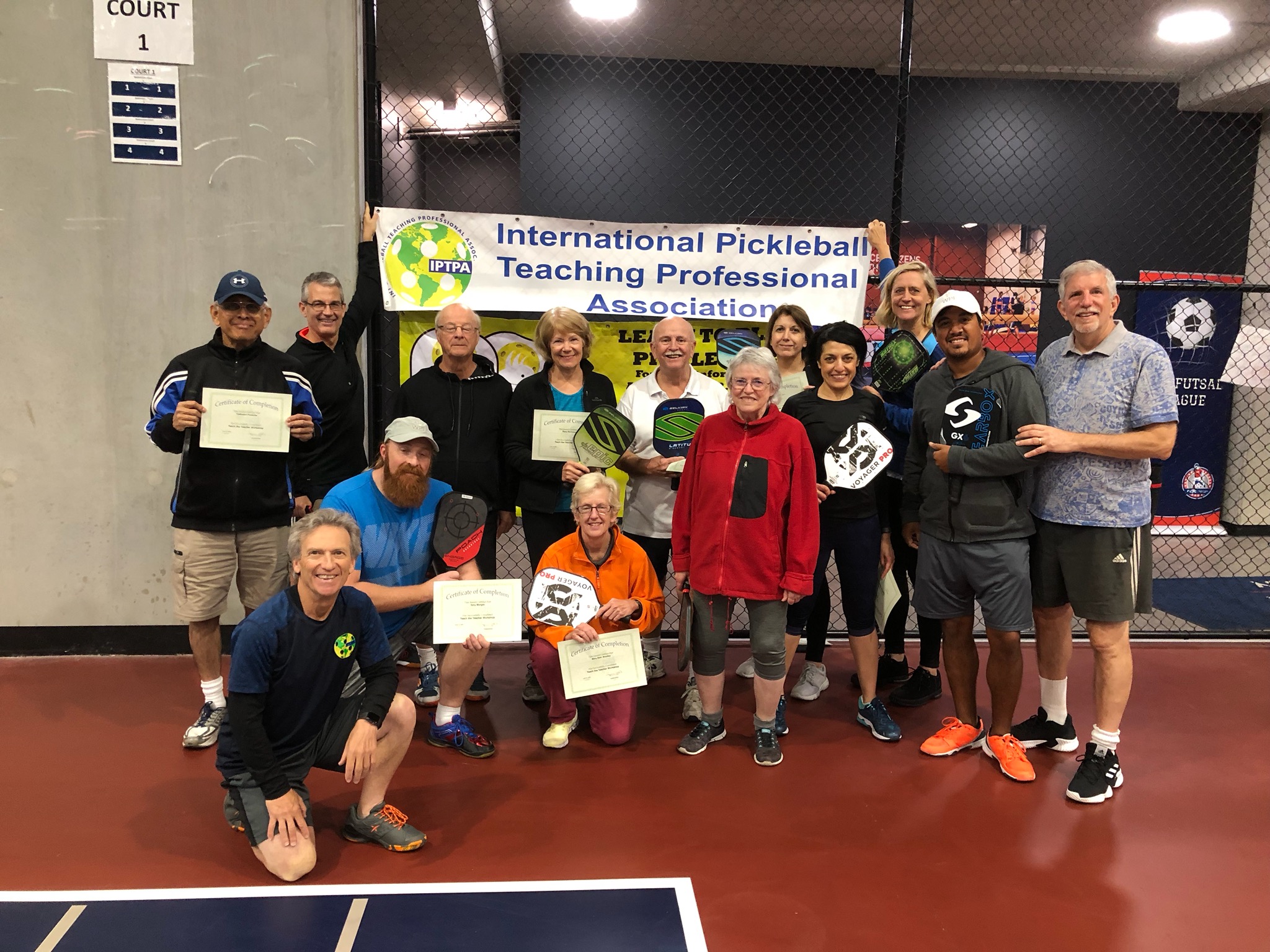
The basic structure of this 75-minute lesson grew out of what I learned during that course. Since then, I have refined the approach through practical experience and have taught more than 1,000 beginners to play pickleball.
Over that time I have found that beginners learn best when explanations are kept simple, they start hitting balls early, and the rules are introduced gradually as they become relevant to actual play.
— Rona Richmond, Pickleball IQ
A simple six-stage progression
Welcome & Safety
Introduce the session, cover safety and organise players.
Court & Paddle
Learn the court and experience some basic paddle contacts.
Serve & Return
Practise the two shots that start every rally.
Two Bounces & Kitchen
Introduce two of pickleball’s most important rules.
Guided Games
Put the rules into practice while the coach helps.
Wrap-Up
Questions, reminders and the player’s next step.
Step-by-step beginner lesson plan
The program works particularly well with four beginners per court and one instructor, giving everyone plenty of opportunities to serve, return and take part in rallies.
1. Welcome, safety and grouping
Start with a brief welcome. Reassure players that they are not expected to master the sport in one lesson.
- Wear appropriate court shoes.
- Stop play when a stray ball enters the court.
- Call “ball” when necessary to alert nearby players.
- Avoid running backwards.
- Stay aware of players and activity on neighbouring courts.
Encourage players to warm up before play, then divide them into groups of approximately four players per court.
2. Court orientation and paddle feel
Point out the sidelines, baselines, centreline, service courts and the Non-Volley Zone — usually called the kitchen.
Then get players hitting. Let them experience a few relaxed contacts before providing too much technical instruction.
A short, controlled shot played softly over the net.
A shot struck before the ball bounces.
A shot played after the ball has bounced.
Keep it simple: at this stage the purpose is familiarity rather than perfect technique.
3. Teach the serve and return
Demonstrate both the volley serve and the drop serve, then show players where they stand and where the ball must travel.
Serve-catch drill
- Place four players on the baselines.
- Players serve diagonally into the opposite service court.
- The receiver catches the ball rather than returning it.
- Repeat several times.
- Change service sides and repeat.
Return drill
- The receiver allows the serve to bounce.
- Return the ball toward the serving team’s end of the court.
- Encourage a reasonably deep return.
- The serving side catches the ball.
- Rotate players so everyone serves and returns.
Why encourage depth? A deep return gives the receiving team more time to move forward toward the kitchen line.
4. Explain the two-bounce rule and the kitchen
The two-bounce rule
The serve must bounce before the receiving team returns it. That return must then bounce before the serving team hits it. After those two bounces, players may volley or allow the ball to bounce.
During early rallies, it can help for the coach to call “one bounce” and “two bounce”.
The Non-Volley Zone
Players may enter the kitchen and hit a ball after it has bounced. What they may not do is volley while touching the kitchen or its line.
Also explain momentum: after hitting a volley, a player cannot allow their momentum to carry them into the Non-Volley Zone.
5. Start playing
This is the most important part of the lesson.
Explain traditional side-out scoring and have the players begin a doubles game. Encourage them to call the score before every serve.
Don’t stop every rally to correct every minor error. Concentrate on the things beginners need in order to understand the game:
If players become confused about the score, encourage everyone on the court to help work it out rather than allowing scoring to dominate the lesson.
6. Finish with a short wrap-up
Allow time for questions and reinforce the rules that beginners most commonly forget:
- The serve and return must both bounce.
- You cannot volley while standing in the kitchen.
- Call the score before serving.
Most importantly, finish positively. The purpose of the lesson is to make players feel that pickleball is something they can do.
What should you watch most closely?
Safety
Balance, mobility, footwear, stray balls and unsafe backwards movement.
Serve
Correct starting position, legal action and diagonal target.
Return
Let the serve bounce first and encourage useful depth.
Two bounces
Make sure the serving team lets the return bounce.
Kitchen
Watch for volley and momentum faults around the Non-Volley Zone.
Positioning
Encourage players to gradually understand the value of moving forward.
Why this format works
New players need some explanation, but pickleball makes much more sense once they see the rules operating inside an actual rally.
That is why approximately 30 minutes of this 75-minute program is devoted to guided games. Serving position, the two-bounce rule, movement toward the kitchen and scoring all become easier to understand once players experience them together.
An instructor can continue correcting technique later. The first lesson should establish a foundation that makes beginners want to play again.
Take the lesson plan onto the court
Download the two-page Pickleball IQ instructor guide with timings, teaching points, drills and a coach checklist.
Keep the first lesson simple
Give beginners the essential rules, enough technique to start a rally and plenty of opportunities to hit the ball.
If they leave the court understanding the basic game and wanting to come back, the lesson has done its job.